


Hope Is the Word has moved! Please visit me at my new home on the web, and please update your links! 🙂
Image: djcodrin / FreeDigitalPhotos.net
Filed under: Bloggy Randomness | 1 Comment »
Hope Is the Word has moved! Please visit me at my new home on the web, and please update your links! 🙂
Image: djcodrin / FreeDigitalPhotos.net
Filed under: Bloggy Randomness | 1 Comment »
 I was all set to leave Easter behind after last week’s Read Aloud Thursday post, but I just couldn’t end the week without sharing one more Easter book. This one is actually one I mentioned in last year’s Easter post, but last year the girls were just a little too young for it. This year, though, it has been perfect for us!


Greater love has no one than this, that he lay down his life for his friends.
The reality of the crown of thorns, the scourging, etc., really seemed to strike the girls (Lulu especially). Benjamin’s Box is not graphic in terms of illustrations or words, but it leaves plenty of room for parental explanation. Plus, the pairing the book with the eggs makes it a lot of fun!
Benjamin’s Box and the Resurrection Eggs have been a big hit at the House of Hope this week!
Has your family been enjoying anything special for Easter this week? Or have you discovered a new picture book that you’ve all fallen in love with? Please share it with us by linking your blog post below, or you may simply leave a comment.
Powered by MckLinky
Click here to enter your link and view the entire list of entered links…

Next week’s Read Aloud Thursday will be at my new blog address! Please update your links! 🙂
Have a beautiful Read Aloud Thursday and a blessed Easter!
Filed under: Education, Holiday, In Step with the Spirit, Picture Books | 8 Comments »
 I received a copy of the beginning volume of Balance Benders: Logic and Algebraic Reasoning Puzzles by Robert Femiano to review for TOS HomeschoolCrew. This book is published by The Critical Thinking Company, and it is but one of a boatload of resources produced by this compnay. The volume of Balance Benders we used is marked for grades 2-6, so I was not very optimistic that my kindergartener would be able to complete any of the puzzles. However, as so often happens, I was pleasantly surprised that she was able to complete the first exercise with little trouble. In fact, she enjoyed it! The whole concept behind this book is that of recognizing equal statements that are based on a balance or scale that contain symbol(s) that are equal . I will be the first to admit that I’m not as knowledgeable about “logic and algebraic reasoning” as I should be will be one day, but I sincerely want this to be a part of my children’s education. This is definitely a resource that I plan to hold onto for future use, and at $10 a volume, I would definitely consider purchasing the more advanced volumes in the future.

For more reviews of this and other Critical Thinking Company products, check out TOS Homeschool Crew blog!

This product was sent to me free of charge for review purposes.
Filed under: Education, Math, TOS Homeschool Crew | Leave a comment »
During this very busy week, we have been reading books in celebration of springtime. I hesitate to designate this as an Easter post, really, because I prefer to focus on the real reason we celebrate this holiday. However, we do usually do the Easter bunny thing–sort of. The girls get Easter baskets full of goodies, we hunt eggs, etc. I don’t think, though, that they’ve ever been confused about what Easter is really all about. In fact, we have a whole mini-library of Easter books which focus on the real reason for the holiday, but I haven’t gotten them out yet. Actually, most of these are probably too young for the girls now, so I might just wait to read them to baby brother. 🙂 I decided this year to focus on some springtime/Easter storybooks this week and then next week to really focus on the real Easter story. These are some Easter storybook gems we’ve read this week.
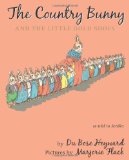


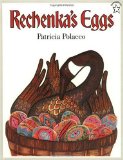

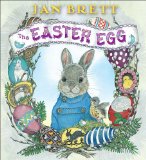

Well, that’s it, folks–at least for the time being. I’m sure we’ll read a few of our old Easter titles next week, as well as enjoy a few more new ones I’ve picked up at the library. Has your family been reading any Easter or spring-inspired books? Please share what you’ve been reading by linking up your Read Aloud Thursday blog post, or simply by leaving a comment.
Powered by MckLinky
Click here to enter your link and view the entire list of entered links…
Next week will be the last week that Read Aloud Thursday will be here at my old blog. My new blog goes live on April 5, so the Read Aloud Thursday for April 8 will be over there. Please update your links!
Filed under: Education, Five in a Row, Holiday, Picture Books, Read Aloud Thursday | 8 Comments »
As a member of TOS HomeschoolCrew, I have been blessed with the opportunity to review a great resource from Children’s Bible Hour Ministries. The Seasons of Faith illustrated book series is a series of books based on Children’s Bible Hour radio scripts. According to the CBH website, “[T]hese stories teach core truths of the Bible so that kids can easily apply them to their lives. Each book focuses on a season of faith-developing topics.” The books are paperback and include a “read along CD” narrated by “Uncle” Charlie. (Regular readers here know how much we love audiobooks here at the House of Hope, so these were very welcome!)  The stories illustrate Biblical principles and are kid-friendly. So far, my girls and I have listened to Braving the Storm, which is the story of a young boy whose family has been dealt a series of difficult blows. His grandfather helps him come to understand how such difficult times are the times to grow down deep roots in Christ.
  I have also listened to Seventy Times Seven, which is the story of a boy who learns what it means to forgive as Christ has forgiven us. Both stories are very practical and realistic in that they are about events that could really happen (and often do) in the lives of children. Each story ends with the plan of salvation that is presented similarly to the way it is presented on the website. These stories are very evangelistic or discipleship-oriented. While I would not categorize these as fine literature, they do remind me of something I would’ve watched or listened to as a child in children’s church or youth camp. I am more than happy to add them to our audiobook collection. At $10 per title, these book-and-CD sets are comparable in price to any other that you would purchase.
Be sure to visit the CBH website for a host of resources, including a video of the making of the Seasons of Faith series!
Visit the TOS Homeswchool Crew blog to read more reviews of this product.
This product was sent to me free of charge for review purposes.
Filed under: Audiobooks, Education, In Step with the Spirit, TOS Homeschool Crew | 1 Comment »

I am going on a bloggy semi-break until after Easter. I need this time to rest and prepare for an extremely busy Easter season, and the best way for me to do that is to pull back a little from the computer. However, I still have some reviews for TOS HomeschoolCrew to complete, and Read Aloud Thursday will also still go on for these two weeks. This is a sticky post, so please scroll down below this post to see what’s new at Hope Is the Word.
I pray that you all have a blessed Easter and that we will all focus on the real hope that we have in Jesus!
On April 5, I plan to go live at my new blog. Please update your favorites and other links before then! 🙂 I look forward to “seeing” you all over there!
Filed under: Bloggy Randomness, Holiday | Leave a comment »

I need another reading challenge about like I needed to eat all of those Girl Scouts Thin Mints last week, but I’ve eyed Katrina’s reading challenges over the past couple of years, and this year, I’m joining in. However, due to a plethora of things I have on my plate right now, I really want this to be as low-stress as possible. I’ve decided to challenge myself to read one book from my official (and recently begun) TBR list. That’s it. These are books I’ve read reviews of online and thought to myself, “I’d like to read this some day.” Well, some day has come. I have until June 20 to read and post my thoughts about the book. I haven’t decided which book I’ll read yet, but when I do, I’ll let you know.
Filed under: Challenges, Memes, and Carnivals | 4 Comments »

Ask Steady Eddie, and he’ll tell you that (my) reading has taken him a lot of places he never imagined dreamed he’d go. Like Prince Edward Island, Canada. Or DeSmet, S.D. Or any of the other several obscure places we’ve sought out due to my reading. Last night, it took us to Murfreesboro, Tennessee, to Hastings Bookstore for Jan Brett’s Spring Tour promoting her new book, The Easter Egg
When we pulled into the parking lot, we saw the big bus. That was exciting!

Of course, I had to pose for a picture with it! It is beautiful! 🙂

When we entered the store, we saw Jan Brett set up at her table. There was a long, long line snaking away from the table toward the back of the store. We simply found what we thought was the end of the line and got in it. It turns out that this was only a small portion of the line, and the kind ladies at the back of this portion of the line instructed us to go get a ticket. Ah, a ticket.

Do you see that tiny little number in the bottom, right-hand corner? 234. That’s right–we held ticket number 234. 🙂 After conversing with the manager, we decided it might be best to leave, get a bite for supper, and come back. So we did.
The poor McAlister’s Deli located in the parking lot of the shopping center we were in boasted that Kids Eat FREE on Tuesday and Thursday nights! I’ll bet they never dreamed how many kids would make their way from Hastings to their besieged restaurant last night. 😉
After enjoying our supper, we returned to Hastings at about 7:00 to resume our place in line. Steady Eddie and I took turns taking the girls around the store to shop. They had $5 from their nana to spend, and those bills were burning the proverbial holes in their pockets. In some of our meanderings about the store, we ran into Hedgie!

Seven p.m. was the time the book signing was supposed to end, but we were still at the very end of a long, long line, and we had been assured that Jan Brett would stay to the very end.
She did. A little bit before 9:00, we made it to the front of the line. When we got almost to the table, I noticed this sweet illustration on an easel. I learned that Jan Brett had demonstrated her drawing skills when the book signing began–at 5:00, before we arrived. I hated that we missed it, but I was glad to snap this picture.

It turns out that those tickets were for the number of books you had for her to sign–two books per ticket. I had already purchased The Easter Egg
Jan Brett was very kind and engaging, despite the fact that we were ticket holder number 234. She had already completed one book signing in Knoxville earlier in the day, but she and her handwriting were just as crisp and beautiful as if they had just begun!


She spent a little bit of time talking with my girls. They showed her their coloring pages of Berlioz the Bear and some of her other characters.


Despite the fact that we didn’t get home until midnight last night, I am very glad we went. It was exciting to meet this real-life, extraordinarily talented, and very famous author and illustrator. I hope my girls remember this, but if they don’t, we have the books (and the pictures)!


We still haven’t even had a chance to read either of the new books (and truthfully, I bought On Noah’s Ark in board book format for baby brother), but I’m looking forward to sharing them with the girls.
I’m glad we got to take part in Jan Brett’s 2010 Spring Tour!

After all, reading can take you places you’ve never dreamed you’ll go! 🙂

_________________________________
Please excuse this hastily written post, but I wanted to share these pictures and our little adventure before I go on semi-bloggy break for the next couple of weeks. I’ll still be posting some TOS HomeschoolCrew reviews and Read Aloud Thursday will go on as usual, and I might have a few other pre-scheduled post. Other than that (!!!), things should be quiet here. My quilting post I promised earlier in the week will have to wait until after Easter. By then, I will be posting at my new, self-hosted address! That blog will go live April 5.
And now, I’m off to prepare for our next adventure! 🙂
Filed under: Author/Illustrator Spotlight, Caught Reading, Education, Field Trips, Holiday, Kindergarten, Picture Books | 9 Comments »
It seems like things have gotten a little off track here at the House of Hope in the past week. I always strive to finish (or mostly finish) Lulu’s kindergarten lessons before lunchtime, but this week it seems that we’ve usually only started the formal stuff (phonics, math) after lunch. I’m trying to realize that this is a season in my life–one in which I move incredibly slowly and sometimes painfully (I have back issues which have been greatly aggravated by this pregnancy). This really puts a crimp in my plans sometimes. Plus, I’m trying to be a more relaxed homeschooler–to realize that no, we can’t do it all in one day, and that’s okay. Anyway, what this has meant is that we have been doing a fair amount of reading in the mornings on the couch. While our read-alouds times in the morning usually do have some direction (i.e. either a FIAR book or go-along or something that goes with our human body study), we’ve also been doing a good amount of “free reading.” We’ve picked up quite a few winners!
 Rabbit Inn
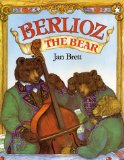

I have more books to share, but my girls are up from rest time. Duty calls! 🙂
What is your family enjoying this week? Please provide a link to a blog post or simply leave a comment. Oh, and spread the word! I’ve recently begun participating in What My Child Is Reading at Mouse Grows, Mouse Learns (when I can remember to link up, that is, since it’s a Saturday event). I like to get Read Aloud Thursday out there as much as possible–the more the merrier, I say!
Powered by MckLinky
Click here to enter your link and view the entire list of entered links…
Have a terrific Read Aloud Thursday!
Filed under: Education, Organization and Scheduling, Philosophy and Methods, Picture Books, Read Aloud Thursday | 8 Comments »

I just wanted to post a quick follow-up to my St. Patrick’s Day post in which I declared that we would be making this cake or these cupcakes today. I opted for the cake after I read lots of comments following the cupcake recipe with phrases like “this took a lot of time” or “time consuming,” etc. Ours was something of an ill-fated project from the beginning: I spilled a little bit of the batter after I added the water to the cake mix, so I guessed at how much water to put back in. Then, I realized that we only possessed two eggs, not three, as the recipe demanded. Last, Louise managed to drop an entire bottle (the bottle too, not just the contents) into the bowl of batter she was tinting.
All things considered, I think it turned out pretty well. The girls agree.
Happy Spring!
Filed under: Arts and crafts, Bloggy Randomness, Education, Holiday, Homekeeping, Kindergarten | 3 Comments »



 Hope Is the Word